Shipping construction equipment through JAXPORT requires coordination between the equipment owner, carrier, transportation provider, terminal, and any company handling port access or temporary storage. The process becomes much easier when each step is confirmed before the equipment begins moving toward Jacksonville.
What Types of Construction Equipment Can Move Through JAXPORT?
JAXPORT handles high-and-heavy cargo such as construction, mining, and agricultural equipment. Depending on the machine and shipping route, it may travel by roll-on/roll-off service, breakbulk vessel, container, or another specialized method.
Roll-on/roll-off shipping is commonly used for wheeled or tracked equipment that can be driven or moved onto the vessel. Larger, unusually shaped, or non-operational machinery may require specialized lifting and handling.
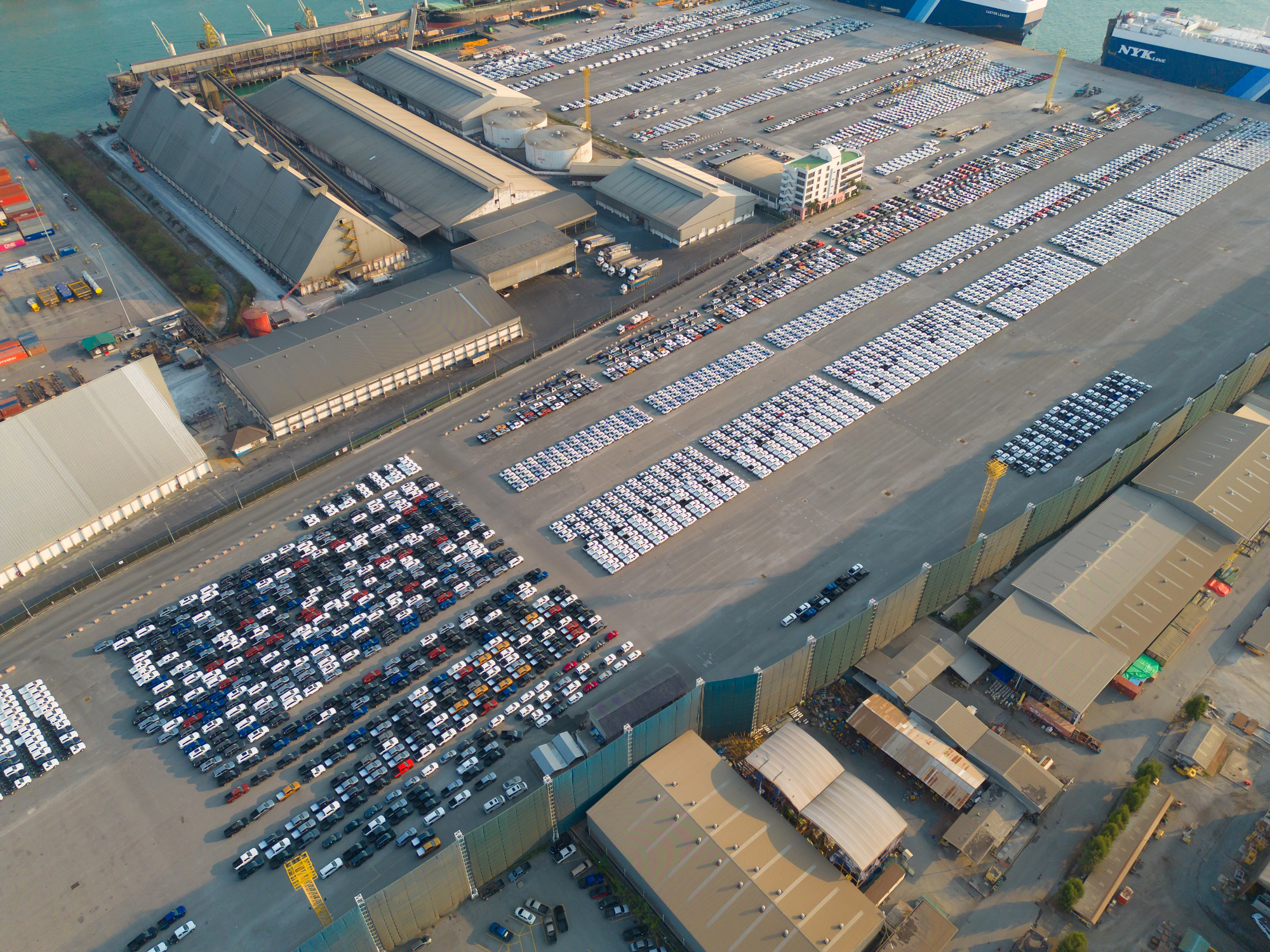
JAXPORT’s Blount Island Marine Terminal has dedicated roll-on/roll-off berths and a heavy-lift berth designed to support oversized cargo.
How Do You Book Construction Equipment for Shipping?
Start by contacting a carrier or freight forwarder that handles your equipment type and destination. You will likely need to provide the machine’s make, model, serial number or VIN, dimensions, operating weight, destination, and operational condition.
Include any attached buckets, blades, booms, or accessories in your measurements. An incorrect height or weight can affect pricing, transportation permits, terminal acceptance, and vessel planning.
Oversized cargo may also require information about its center of gravity, lifting points, or configuration. Providing these details early gives the responsible parties time to plan how the equipment will be transported and loaded.
What Documents May Be Required?
Requirements vary by carrier, destination, ownership status, and equipment type. Common documents may include:
- Carrier booking confirmation
- Original title or approved proof of ownership
- Bill of sale or commercial invoice
- Government-issued identification
- Lienholder authorization for financed equipment
- Authorization for a third-party driver
- Export filing information
- Serial number or VIN documentation
Used self-propelled equipment may be subject to U.S. Customs and Border Protection vehicle export rules. CBP generally requires qualifying ownership and export documentation to be submitted at least 72 hours before export.
Review CBP’s vehicle export requirements and confirm the process with your carrier before scheduling delivery.
How Should the Equipment Be Prepared?
A machine that works perfectly on a jobsite may still need attention before entering the terminal. Remove loose tools, personal belongings, trash, and unsecured accessories. Check for leaks and confirm that movable parts are lowered, pinned, or secured.
The equipment should also start, steer, brake, and move as expected unless the carrier has approved it as non-operational cargo. Port Storage & Delivery’s guide to preparing cars and heavy equipment for hauling to JAXPORT offers a closer look at inspections, load preparation, documentation, and delivery timing.
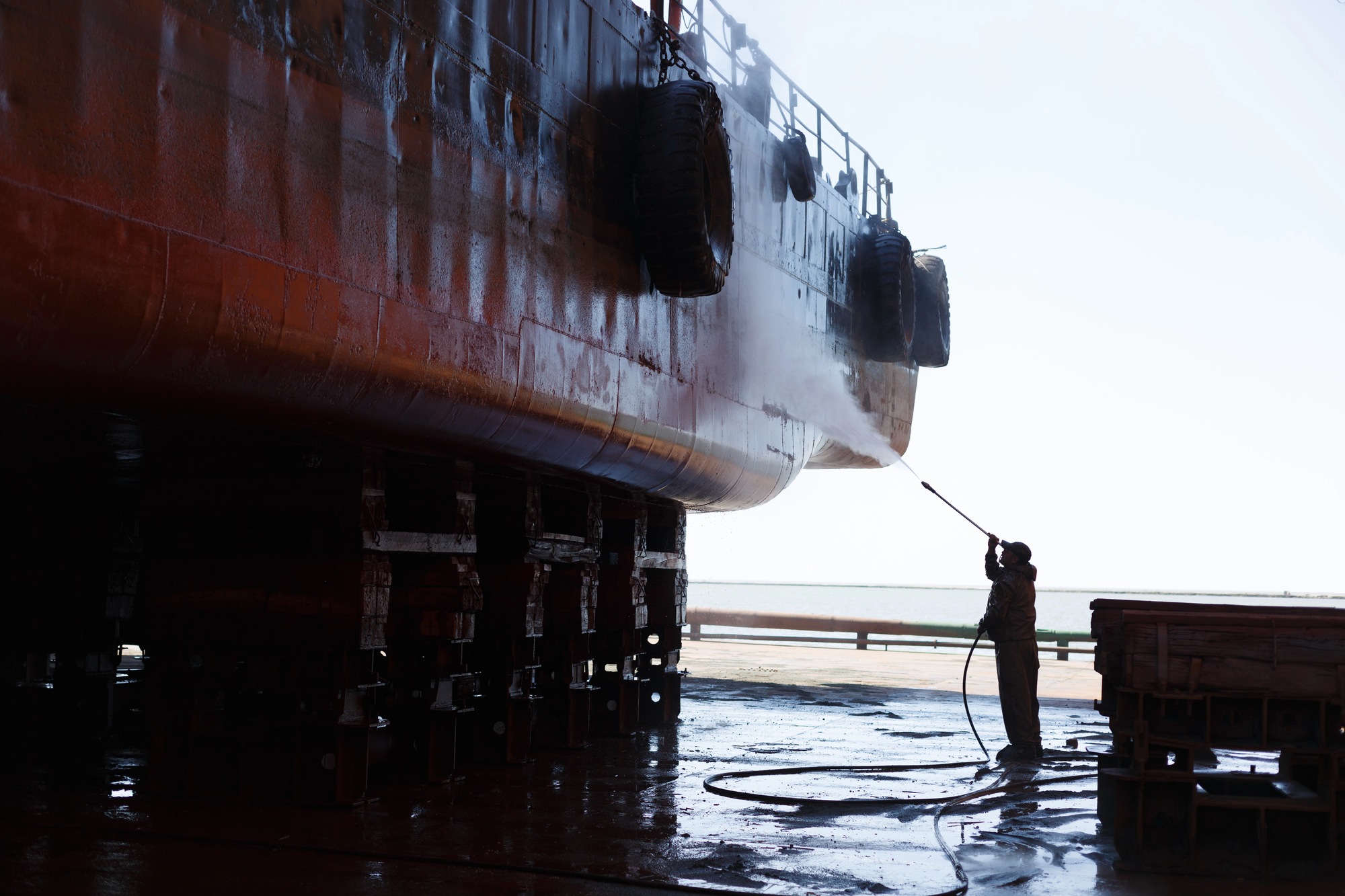
Cleaning deserves attention, too. Mud and jobsite debris can hide damage, identification numbers, and securement points. The undercarriage, tracks, tires, wheel wells, buckets, and attachments should be checked before transport.
Read more about how professional equipment washing can protect equipment and prevent port delays, or explore Port Storage & Delivery’s equipment-washing services near JAXPORT.
Should Construction Equipment Be Inspected Before Shipping?
A pre-shipment inspection creates a record of the equipment’s condition before it changes hands. Photos and written notes should document all sides of the machine, its serial number, operating hours, attachments, and existing damage.
This record can help answer questions if damage is discovered after the equipment reaches its destination. An inspection may also uncover a leak, loose component, or maintenance concern while there is still time to correct it.
The article Why Equipment Inspections Before Shipping Can Save Thousands explains why early documentation matters. Port Storage & Delivery also provides vehicle and equipment inspection and surveying services.
How Does the Equipment Reach JAXPORT?
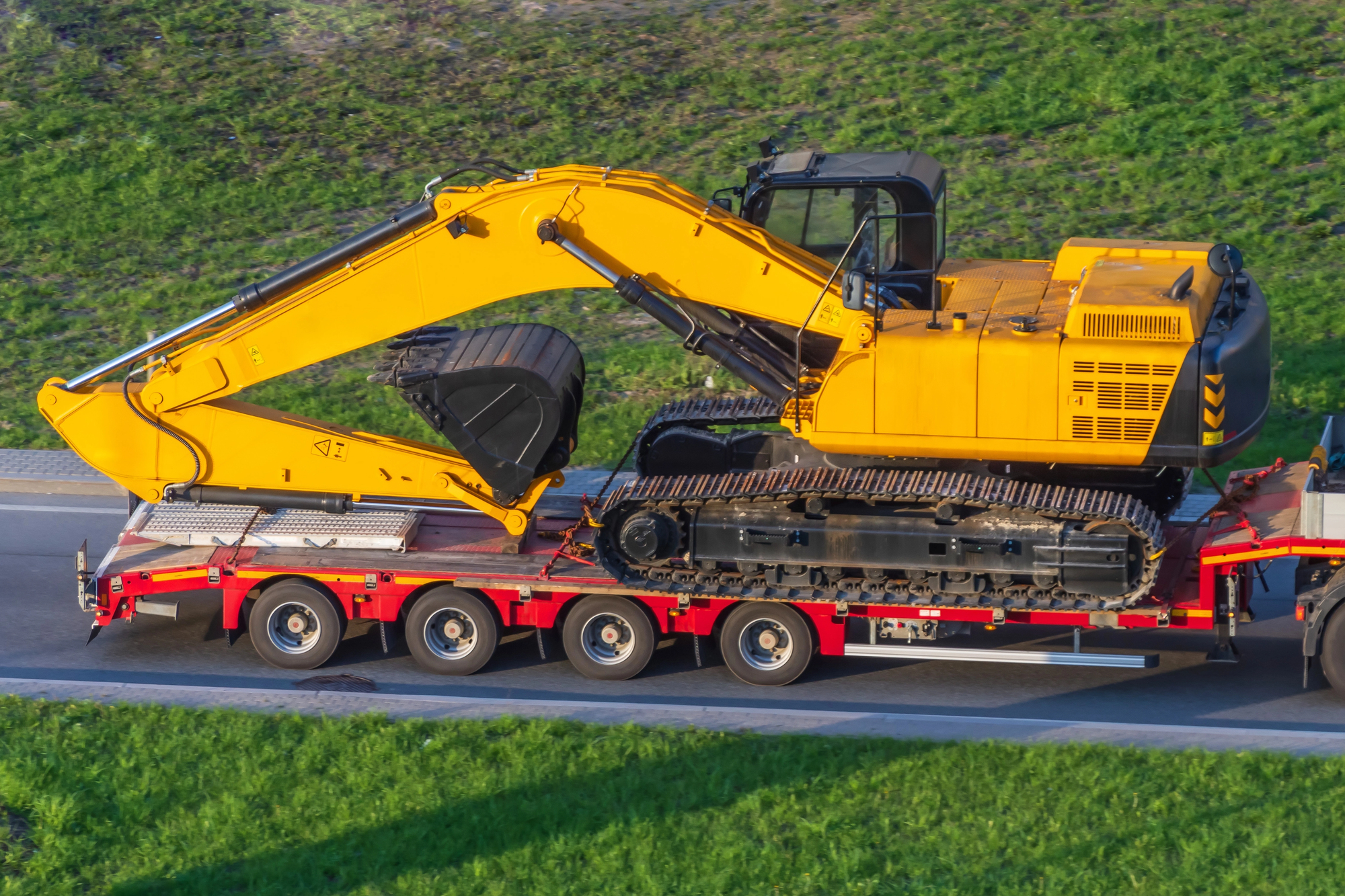
Transportation depends on the machine’s weight, dimensions, and condition. Smaller equipment may travel on a standard trailer, while oversized machinery may require a lowboy, permits, route planning, escorts, or specialized loading equipment.
The hauling provider should receive the booking number, terminal address, delivery window, equipment measurements, and access instructions before pickup. Port Storage & Delivery can coordinate hauling for vehicles and equipment to JAXPORT.
Drivers entering secure terminal areas may also need a TWIC card. If the driver does not have one, TWIC escort services may be required.
What If the Equipment Arrives Too Early?
Sailing schedules and inland transportation do not always line up perfectly. Temporary storage can provide a nearby place for equipment to wait when it arrives early, misses an appointment, or encounters a vessel delay.
Port Storage & Delivery offers vehicle and equipment storage near JAXPORT. You can also read more about using storage solutions during port delays.
Coordinate the Shipment Before the Equipment Moves
The most expensive time to discover a problem is when a loaded trailer is already waiting at the port. Confirm the booking, measurements, documents, transportation plan, equipment condition, terminal, and access requirements before pickup.
Port Storage & Delivery can assist with hauling, washing, inspections, storage, title validation, and TWIC escorts near JAXPORT. Contact Port Storage & Delivery to discuss what your equipment shipment may need.
Frequently Asked Questions
1. Can non-operational construction equipment be shipped?
Possibly, but the carrier must know that the equipment cannot move under its own power. Additional towing, lifting, or loading arrangements may be required.
2. Does construction equipment need to be cleaned before shipping?
Requirements vary, but removing mud, vegetation, grease, and jobsite debris can make inspections easier and reduce the chance of acceptance problems.
3. Does a driver need a TWIC card to deliver equipment?
Drivers entering secure terminal areas generally need a TWIC credential or an authorized escort. Confirm the access procedure for the specific terminal before arrival.
.svg)
.svg)
.svg)
.svg)